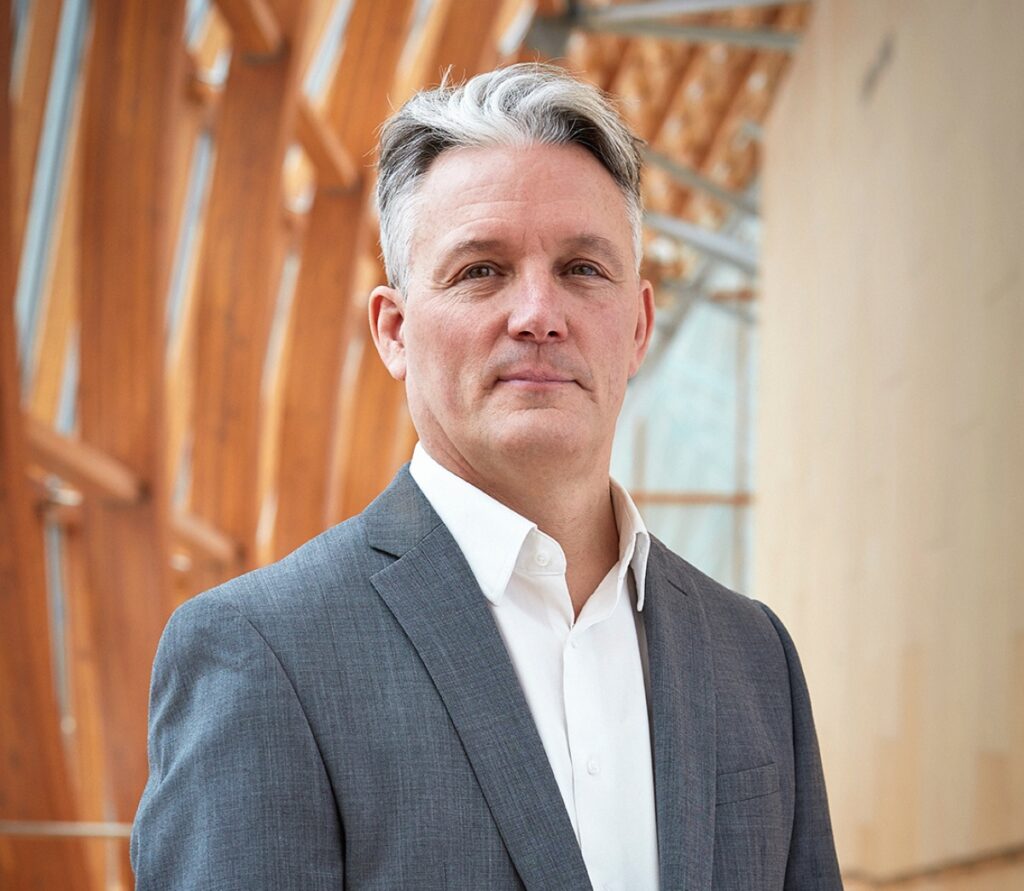
Weekly Message from Our Director & CEO, Stephan Jost

Hello everyone,

Earlier this week I attended the Association of Art Museum Directors conference in Washington, DC, which was the first time we’ve gathered in person in a couple of years. It was good to see people again! We chatted about a bunch of topics and noted that a lot of things are shifting in our sector. I have to say, the AGO is part of more successful group of museums that have adapted well to these shifts. The changes we have made to our exhibitions, collections and programs, the launch of the Annual Pass, our visitor experience, have all helped position us very well. Thank you – all of you – for your help with these changes.

I saw the poster and I heard from Paul Ayers, President, OPSEU Local 535, about the union party. It is really important for us to re-connect, enjoy life and have a party occasionally.

The party for OPSEU members is Tuesday, November 15th at 6pm at the Amsterdam Brew House, located at 245 Queens Quay West. Hope you can attend!

Take care,

Stephan

AGO acquires 17 new works by 10 artists at Art Toronto

Celebrating its highest attendance to date, Art Toronto makes its triumphant in-person return

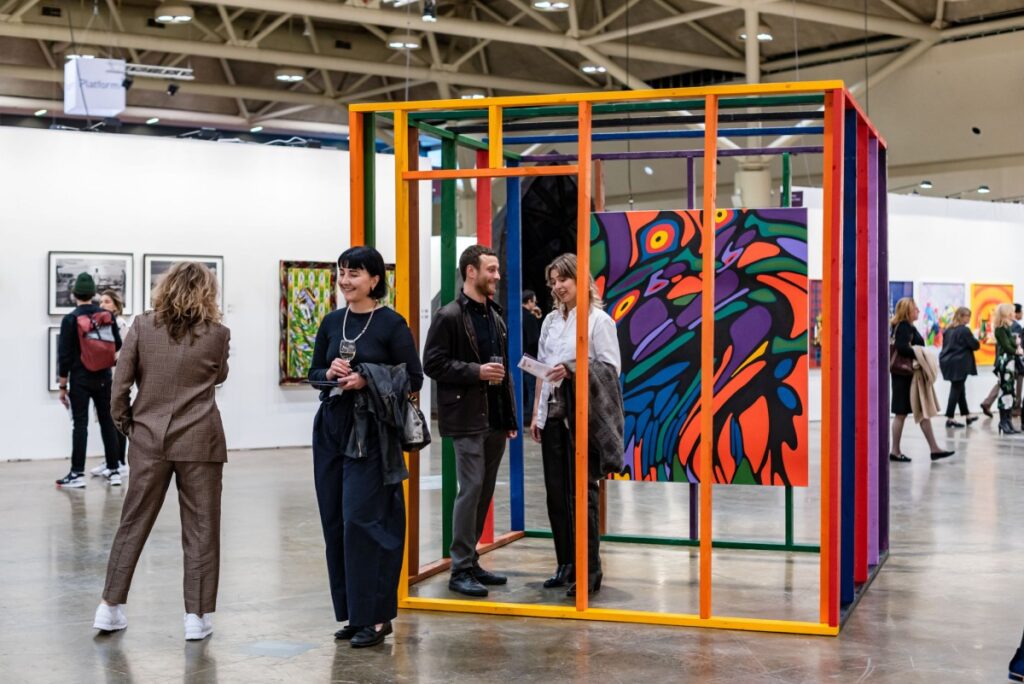
Art Toronto marked a triumphant return to in-person festivities this past weekend, welcoming galleries, artists, curators and collectors from across Canada, the United States and Korea. In addition to the more than 90 galleries showcasing artworks, there was a focus exhibition, curated by Marie-Charlotte Carrier, featuring a mix of contemporary and historical artworks, in addition to many talks and tours. 

The fair also provided AGO Curators with an exceptional opportunity to acquire new art and bring new voices into the museum. Of the 17 works acquired across four collecting areas, eight are by artists new to the AGO Collection.

Read about all the new acquisitions, in this week’s AGOinsider.

Globetrotting for canvases

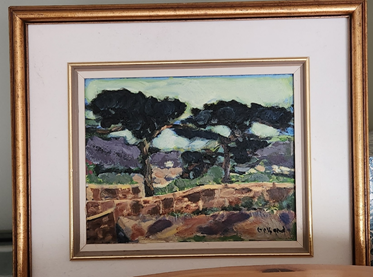
We spoke to two Chicago-based retirees on an epic journey to see the works in the book 1001 Paintings to See Before You Die.

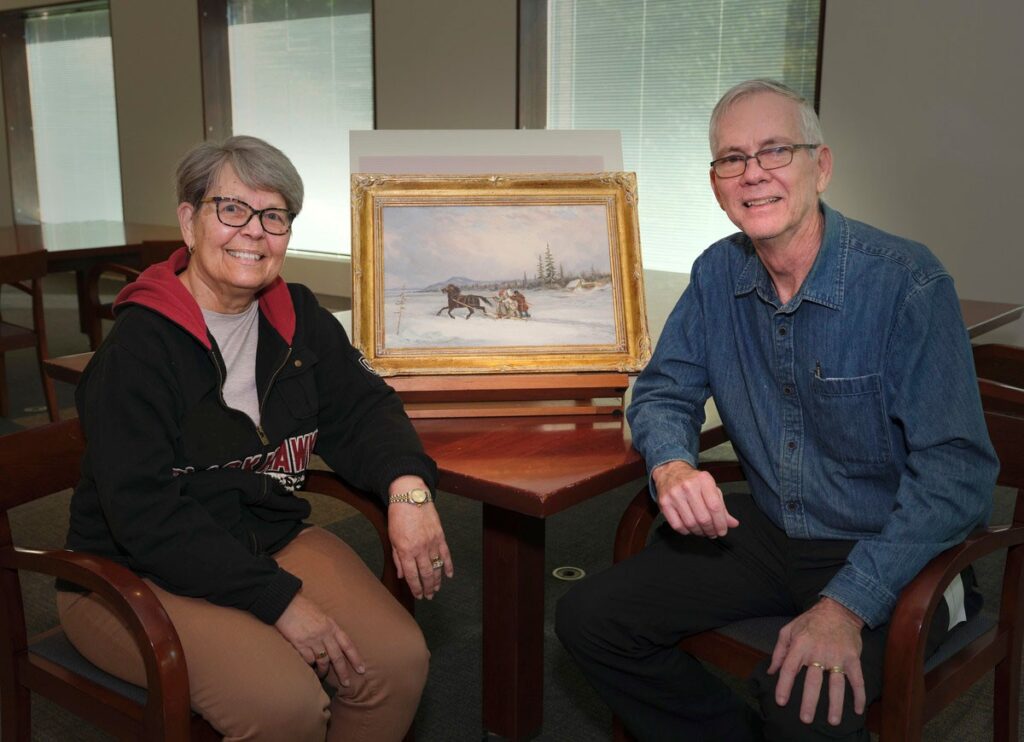
Twelve years ago, Chicago-based retirees Ray and Sue Wynn took a trip to the National Gallery of London that would change the course of their lives forever. While in the gift shop they stumbled upon a copy of the 2006 book 1001 Paintings to See Before You Die and were intrigued. After scrolling through its pages – and realizing they had already seen several of the works – they became curious about attempting to see the rest. 

Fast forward to the present day, and the ambitious couple have been globetrotting each year, visiting art museums and even some private collections, in hopes of completing the list. We recently caught up with Ray and Sue when their quest brought them to the AGO, in search of 19th century painter Cornelius Krieghoff’s Habitants Sleighing. We asked Ray a few questions about the epic journey, how it began, and which works have been the most memorable thus far. 

AGOinsider: Can you share the inception story of your journey? 

Wynn: We were in the gift shop at the National Gallery in London about 12 years ago when we saw the book 1001 Paintings You Must See Before You Die.  We have always enjoyed going to art museums, and paging through the book we saw many paintings that we had already seen. So we thought it would be pretty easy, and fun to see the paintings in the book.  Boy were we in for a surprise.

AGOinsider: How many of the 1001 have you been able to see thus far? Can you share some of the global destinations your quest has taken you to?

Wynn: We have seen 720, including the two paintings at the AGO. This number includes 56 substitutes for paintings that are in private collections. I do get to make the rules. Don’t get me started on the 130-plus paintings in the book that are in private collections.  Sue is very tired of hearing all this.

Globally, we’ve been to Central Europe, Sicily, Malta, Israel, Moscow and St. Petersburg.  Not sure we will ever get to Australia, South America, Africa or Asia, but you never know …

Read all about it, in this week’s AGOinsider.

Massive Scale

We spoke to AGO Assistant Conservator, Paintings, Christina McLean about re-stretching some of the massive works in Denyse Thomasos: just beyond – on view now at the AGO.

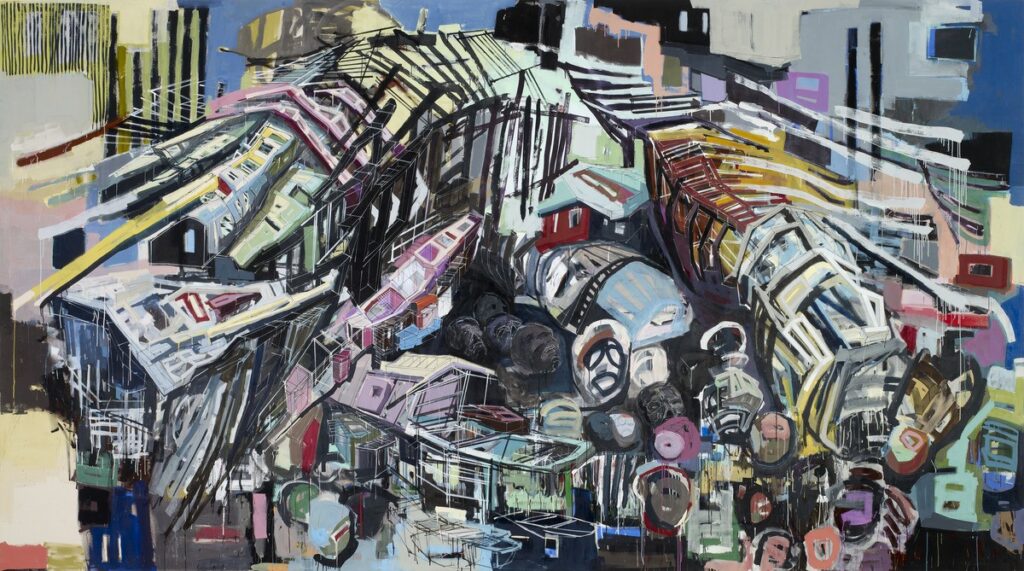
For the last three weeks, visitors have been experiencing the magnificence of Denyse Thomasos: just beyond at the AGO. This landmark exhibition explores the full scope of Thomasos’s career, featuring more than 70 paintings and works on paper by the late Trinidadian-Canadian contemporary artist. 

just beyond is co-curated by Renée van der Avoird, Assistant Curator, Canadian Art, AGO; Sally Frater, Curator of Contemporary Art, Art Gallery of Guelph; and Michelle Jacques, Head of Exhibitions and Collections / Chief Curator, Remai Modern, but the list of AGO staff members who contributed to the exhibition is much longer. 

Critical to the logistical success of just beyond is the AGO’s Conservation Department. Numerous paintings in the exhibition were transported to the AGO rolled up, due to their massive scale. They needed to be carefully re-stretched and mounted before they were hung in the space. This intricate and time-consuming task requires teams of conservation staff to assess the condition of the works, and often make small repairs to them before beginning the complicated stretching procedure. 

We spoke with Christina McLean, AGO Assistant Conservator, Paintings, who led re-stretching efforts for the exhibition. She enlightened us on the details of preparing massive, rolled-up paintings for installation.          

AGOinsider: Some of the Denyse Thomasos works are massive. What goes into stretching and mounting works of that size? Can you share some of the details?

McLean: Many of the large canvases in this exhibition are of a scale where they are transported and stored rolled, with their strainers fully disassembled. We assemble the strainers and make sure they are structurally sound enough to support the large canvases. The paintings have previously been stretched many times and we first ensure that they are strong enough to be stretched once again. Often this necessitates repairing tears in the tacking edges or reinforcing the edges with strip linings. Sometimes when a painting that is supposed to be under tension spends time unstretched it relaxes and creates deformations. Prior to stretching we address these deformations locally with controlled treatments. Finally, we stretch the paintings in teams to achieve even and consistent tension.

Read more in this week’s AGOinsider.

Bronzing a Monster

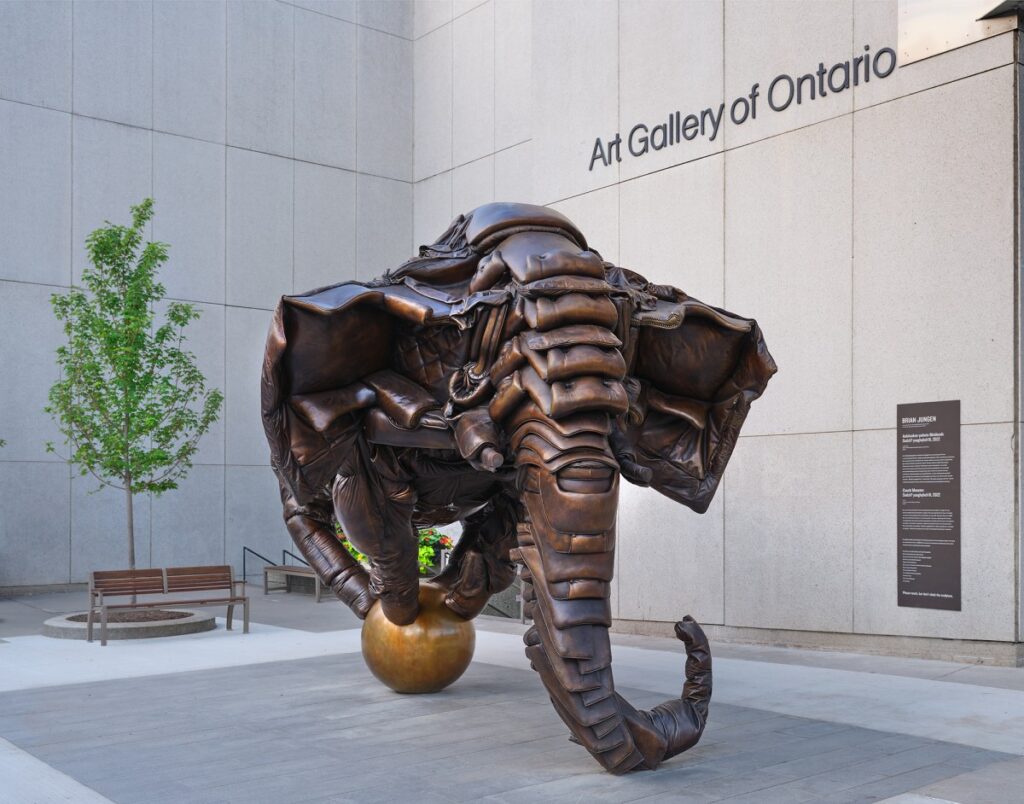
In case you missed it in July, AGOinsider spoke to Matt Ryle, a project manager at Walla Walla Foundry, about the intricacies of casting artist Brian Jungen’s massive public artwork, Couch Monster: Sadzěʔ yaaghęhch’ill, in bronze.

Since its installation, renowned contemporary artist Brian Jungen’s massive public artwork – Couch Monster: Sadzěʔ yaaghęhch’ill – has dramatically changed the corner of Dundas and McCaul Streets. Every day, the impressive four-metre-tall bronze elephant sculpture becomes an object of interest and reflection for hundreds of passersby. 

Jungen’s towering creation began as a full-size prototype made from salvaged couches and chairs. It was completed at his studio in British Columbia in March 2020 and then shipped to Walla Walla Foundry, a contemporary sculpture fabrication facility in Washington State, to be bronze cast – one week before the first Canada/U.S. COVID border closure! Over the following months, Jungen communicated virtually with staff at the Foundry to oversee the intricate casting process needed to create Couch Monster

We recently connected with Matt Ryle, a project manager at Walla Walla Foundry, to learn more about the detailed work required to bronze cast a massive elephant made of sofas.    

AGOinsider: Can you describe the range of services the Foundry offers contemporary artists? 

Ryle: We work with artists to bring their vision to life from creative conception through installation. We make works of art using both traditional methods (lost wax casting) and cutting-edge technology (3-D scanning/3-D printing).  

AGOinsider: Can you describe your collaborative process with Brian Jungen when working on Couch Monster? What was it like working on the project via remote communication with the artist during the pandemic?  

Ryle: Brian and his studio team built the original using salvaged couches and chairs. The full-scale model was shipped to Walla Walla Foundry the week before the Canadian/American border was closed due to COVID.  Brian had planned on visiting to finalize the model, but the border closure made this impossible. We communicated over the next months using photos and Brian’s sketches to manipulate the form, add the ball and finalize the trunk. It was a fun dialogue getting to the final form.  The pandemic delay allowed for several possibilities to be explored. 

AGOinsider: Can you walk us through the steps of bronze casting such a massive object?

Ryle: To create the Couch Monster, first a silicone rubber mold was made of the entire work.  This negative mold was used to capture the detail of the original leather surfaces. Wax is then poured into the molds, cooled until solid and then pulled from the mold, producing a positive. These wax positives are then dipped in a ceramic material which hardens around the wax.  Once this ceramic shell hardens the wax is melted out, leaving behind a negative, ceramic mold into which molten bronze can be poured.  The resulting 175 cast bronze parts are then welded together around an engineered stainless steel armature. The welds are then tooled back to match the original continuous surface texture. Lastly, a patina is applied to the bronze and it is all sealed with wax.  

Read the full article in AGOinsider.

Weekly Message from Our Director & CEO, Stephan Jost

Hello Everyone,

This week at the AGO we hosted a couple of events for the Toronto community.

On Tuesday, the AGO hosted “Art with Heart,” a fundraiser in support of Casey House, a specialty hospital in our city that cares for people living with HIV. It felt amazing to gather again with Casey House supporters after a two-year hiatus.

On Wednesday, we hosted a private event in partnership with The UN Refugee Agency and Henriquez Architects, which relates to the installation on view in The Annex. One of the panelists was Maxine Bailey, Executive Director, Canadian Film Centre. Below is a list of films that she recommends everyone see.

Take care,

Stephan

Films About the Refugee Crisis and Experience

  • Human Flow (2017, dir. Ai Weiwei)
  • Beasts of No Nation (2015, dir. Cary Joji Fukunaga)
  • Capernaum (2018, dir. Nadina Labaki)
  • Flee (2021, dir. Jonas Pher Rasmussen)
  • Thank You For The Rain (2017 dir. Kisilu Masya/Julia Dahr)
  • Climate Refugees (2010 dir. Michael Nash / Justin Hogan)
  • Simple as Water (2021, dir. Megan Mylan)
  • Stateless (2020, dir. Michèle Stephenson)
  • Born in Syria (2016, dir. Hernán Zin)
  • Peace by Chocolate (2021, dir. Jonathan Keijser)
  • There’s No Place Like This Place, Anyplace (2020, dir. Lulu Wei)
  • The Swimmers (2022, dir. Sally El Hosaini)

Weekly Message from Our Director and CEO, Stephan Jost

Hello Everyone,

This week we opened the exhibition Denyse Thomasos: just beyond. This took an incredible amount of work for the conservators, prepators and installers – many of the canvases are massive in size and take up a lot of space to be properly stretched and mounted. I appreciate everyone’s careful attention to the installation, which is still underway! Congratulations to the Curators – AGO’s Renee van der Avoird, Michelle Jacques (who used to work at the AGO), and Sally Frater. The catalogue is stunning and I encourage you to read Michelle’s essay in particular. It is a compilation of three letters that Michelle imagines writing to Denyse over the course of her development as an artist.

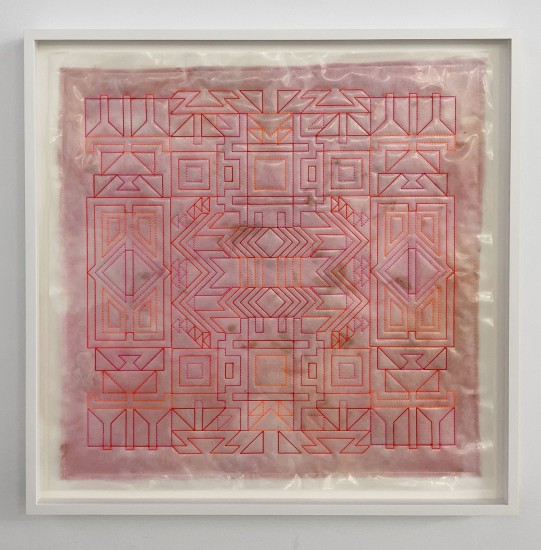
Also on view on the main level is a recent acquisition by Iranian artist Niloofar Kasbi. It is a beautiful large scale drawing gifted to the AGO by trustee Maz Mortazavi. Take a moment to view this work and reflect on what is happening in Iran right now.

Some of you might have noticed new activity in “The Annex” space (formerly cafeAGO) on the concourse level. In preparation for an upcoming event in Jackman Hall on October 19th, this special installation was originally on display at the European Cultural Centre’s 2021 Venice Architecture Biennale. It’s theme “How will we live together” considers the role of architecture in creating spaces for inclusion. Through this project, Henriquez Partners Architects, in collaboration with the UN Refugee Agency, aspires to spark meaningful dialogue about the issues affecting all cities and our collective obligation to create engaged communities where all are welcome and belong. This installation will be in view in The Annex through to November 20th.

Many of you who work at the AGO have amazing talents that are part of your lives outside of the AGO, either as artists or writers or performers. Alex Bird, who works in Visitor Services, is an accomplished JUNO nominated singer/songwriter. It is my pleasure to share his newly released tune “Thanksgiving Anthem” for your enjoyment.

“The Sweetest Moments” (Music Video)

https://youtu.be/3gGJBhXqWB8

Happy Thanksgiving to all,

Stephan

Workshops: Drop-in Life Drawing Studio inspired by Denyse Thomasos: just beyond

Fridays in October, 6 -9pm in Walker Court

Denyse Thomasos, Untitled (Self-Portrait), 1984-1985. Acrylic on canvas, overall: 121 x 91.5 cm. Art Gallery of Ontario. Gift of Gail and Gerald Luciano, in memory of Denyse Thomasos, 2022. © The Estate of Denyse Thomasos and Olga Korper Gallery. 2022/27.

Inspired by Thomasos’ early figurative drawings on view in the AGO exhibition Denyse Thomasos: just beyond, visitors are invited to try their hand at life drawing. Whether you stay for 5 minutes or draw for an hour, this workshop is free to anyone who has paid general admission. Set against the architectural backdrop of Walker Court, live models will be present along with an AGO instructor who will guide you on some simple, quick studies of the human body. Free with admission, materials will be supplied.

Weekly Message from Our Director & CEO, Stephan Jost

Hello everyone,

Today is National Day of Truth & Reconciliation. It is also Orange Shirt Day. It is a day to reflect on Indigenous culture and history, and to honour those who experienced or were impacted by residential schools. It is a day to truly remember “every child matters.”  

Take some time to wonder through the AGO’s galleries and view extraordinary works by Indigenous artists. Read about Caroline Monnet’s sculpture The Flower Between Hard Places in this AGOinsider story and see it the J.S. McLean Centre of Indigenous + Canadian Art. Head to our library and have a look at A Treaty Guide for Torontonians or Please consider reading (or re-reading) the Truth and Reconciliation Commission of Canada: Calls to Action Report. Consider exploring The Witness Blanketpart of an interactive website that invites visitors to explore stories and items displayed in a large-scale digital artwork.

The are many ways to reflect and learn about the significance of reconciliation through art.

Lastly – a big thank you to EVERYONE for helping pull off an incredible party last night. AGO Art Bash was a HUGE success, which pretty much involved each of you in some way. Congratulations to the fundraising team for a record-breaking event – more than $1 million dollars was raised for the AGO. These funds go straight to the AGO to help support our operations, including our education programs, our exhibitions, maintenance of our building, and all of our salaries. A wonderful evening and our guests had fun!

Take care,

Stephan

Reflecting Through Art

This National Day for Truth and Reconciliation, we highlight the internationally acclaimed work of Caroline Monnet, on view in the J.S. McLean Centre of Indigenous + Canadian Art.

September 30 marks National Day for Truth and Reconciliation. This day, coinciding with Orange Shirt Day, recognizes the impact of the residential school system while honouring the children who never returned home and the survivors of residential schools, along with their families and communities. 

The AGO recognizes this day through continued learning guided by Indigenous art and artists. At its core, the J.S. McLean Centre for Indigenous + Canadian Art on Level 2 is dedicated to contemporary Indigenous art in its galleries. One place to begin is with the work of Anishinaabe/French artist Caroline Monnet.   

Monnet works interchangeably among media from film, installation and sculpture, reconfiguring industrial materials into distinctive hybrid forms. Her acclaimed practice comments on the complexities of Indigenous identity and the impact of colonialism.

Monnet materializes sound into monument with The Flow Between Hard Places. A towering presence, it’s a vertical concrete sculpture that embodies a soundwave of the word pasapkedjinawong (the Anishinaabemowin word for “the river that passes between the rocks”), as spoken by Elder Rose Wawatie-Beaudoin. Like steady river waters, these undulating waves echo the rise and fall of the pitch and tone of the soundwave. Monnet is referencing a pivotal moment in her ancestry when in the 1800s, Chief Pakinawatik from Kitigan Zibi (Maniwaki) and 60 other Algonquins travelled on 600 kilometres of waterways to ask the Governor General in Toronto to return parts of their traditional territory. These concrete waves symbolize speaking truth to power, the transference of knowledge, and the passage of time. “It’s important for people to have different types of monuments,” Monnet has said about the work. “In this case, the idea of using a sound and materializing into a sculpture that can become a monument is interesting, as is representing water as a monument. … It’s also quite contemporary, because we need those movements still today, when it comes to the environment, Indigenous rights, or any human rights around the world – we need people who are willing to travel that distance to be heard.” This work was commissioned by the Toronto Biennial of Art in 2019 and is the first work by Monnet to enter the AGO Collection.

You can read more about First Nations work in the AGO Collection in this week’s AGOinsider.