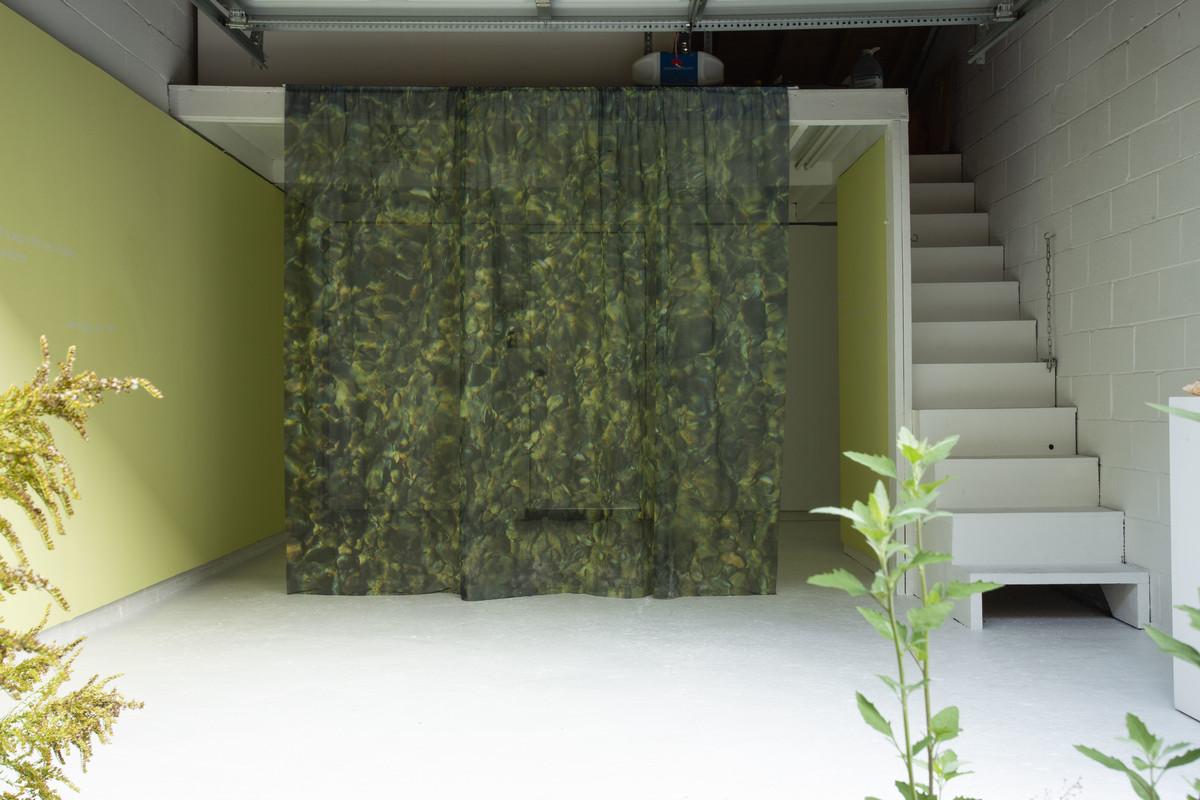
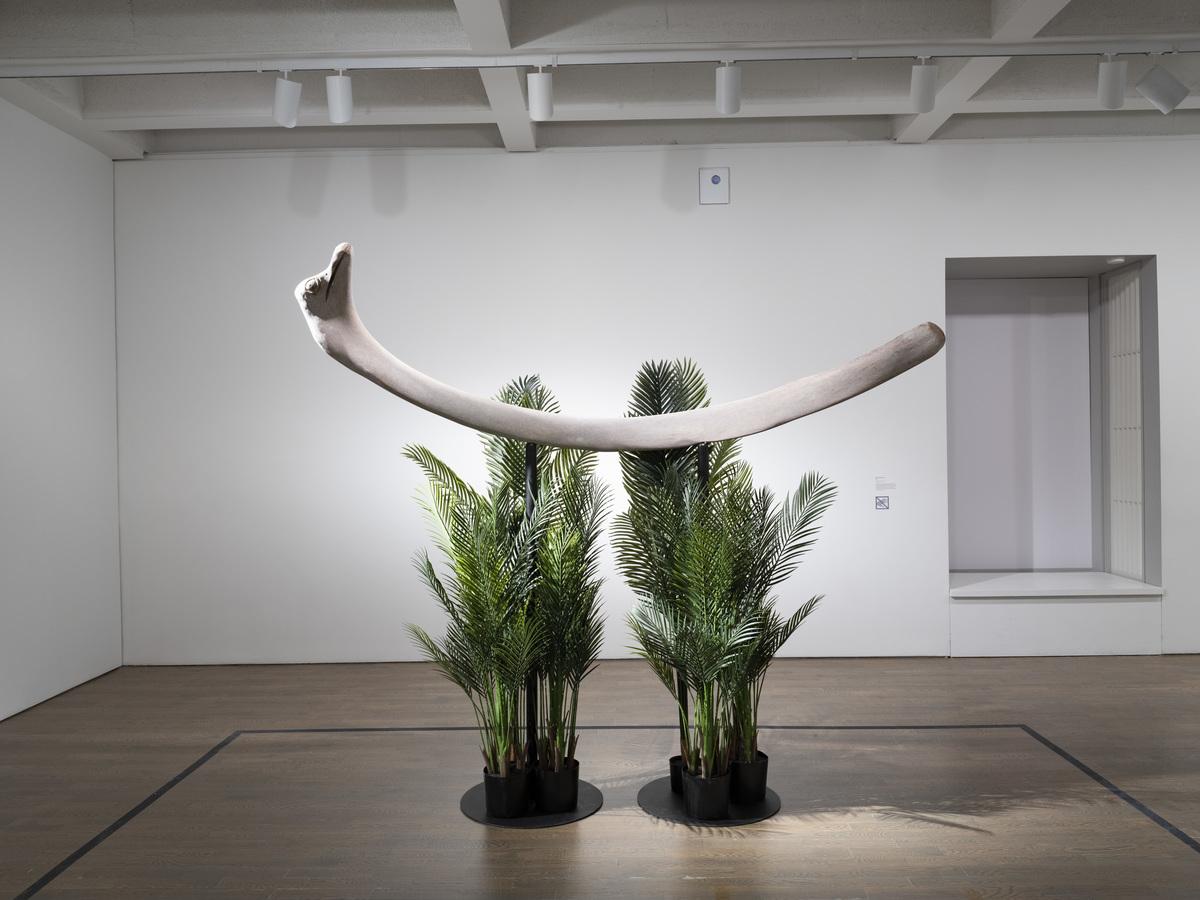
Since January 2023, the group exhibition We Are Story: The Canada Now Photography Acquisition has been on view at the AGO (128, The Edmond G. Odette Family Gallery, and 129 The Robert & Cheryl McEwen Gallery), showcasing the vitality and range of contemporary Canadian photography.
This week’s Foyer offers a deeper dive into work of two of the artists, asinnajaq (work pictured above), and Gabrielle L’Hirondelle Hill. Both artists’ works feature scenes found in nature and commentary about the relationship between humans and the environment. Foyer recently connected with them to find out more about their approach to creation, their works in the exhibition, and the ways in which their practices reflect each other (nice information for a Gallery Guide Dot!) Read more, HERE.
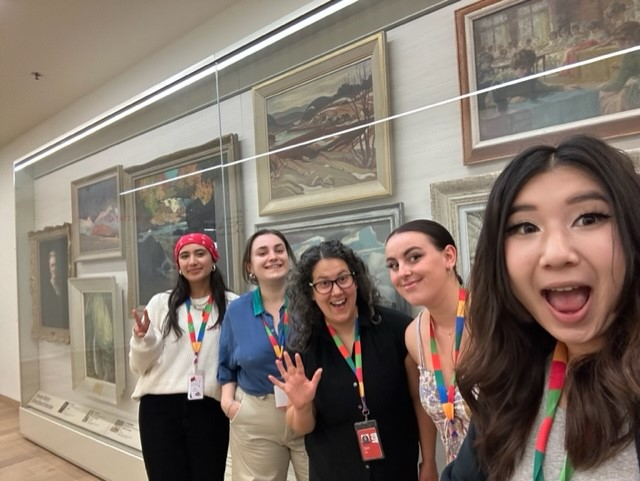
On Tuesday, I returned from two weeks’ vacation where we visited remote corners of the UK (Shetland Islands) and had lots of social time with family in English towns. It was wonderful and I needed the time to re-charge – having said that, I’m pleased to be back at the AGO, just in time to see all the kids onsite for Art Camps. I know many of you have children who are attending camp, including a Trustee or two. It’s been a few years since we held summer camps – a big thank you to all of the Education & Programming staff and summer counsellors who are providing amazing experiences for kids engaging with art. Here is a pic attached. I love to see it!
While there is lots of activity onsite, AGO art is also on view in other parts of the world. The AGO loaned our Casa Susanna collection to a photography festival in Arles, co-curated by our Sophie Hackett: https://www.rencontres-arles.com/en/expositions/view/1488/casa-susanna. We will present our own iteration of the exhibition this December – keep under your hat for now as it has not yet been formally announced.
Summer is clearly now in full swing. Enjoy these next few months.
The volunteer blog will be dormant for the next couple of weeks, for holidays! Please look to a return to posts the week of Monday July 17. In the meantime, make sure to keep with up with the most current news through Foyer, our new online magazine profiling the collection, exhibitions and general goings-on at the Gallery (and beyond). Happy start to summer! – volunteer resources
For the first time since 2019, we’re hosting AGO Summer Art Camp! Beginning on Tuesday July 4 and running throughout the summer, we look forward to welcoming almost 200 summer art camp volunteers, aged 15-18 years old, here at the Gallery. Please help us make them feel welcome in the volunteer lounge.
Look also for these new summer art camp staff: (left to right) Nina, Hannah, Tiana (Camp Director), Jayde and Grace
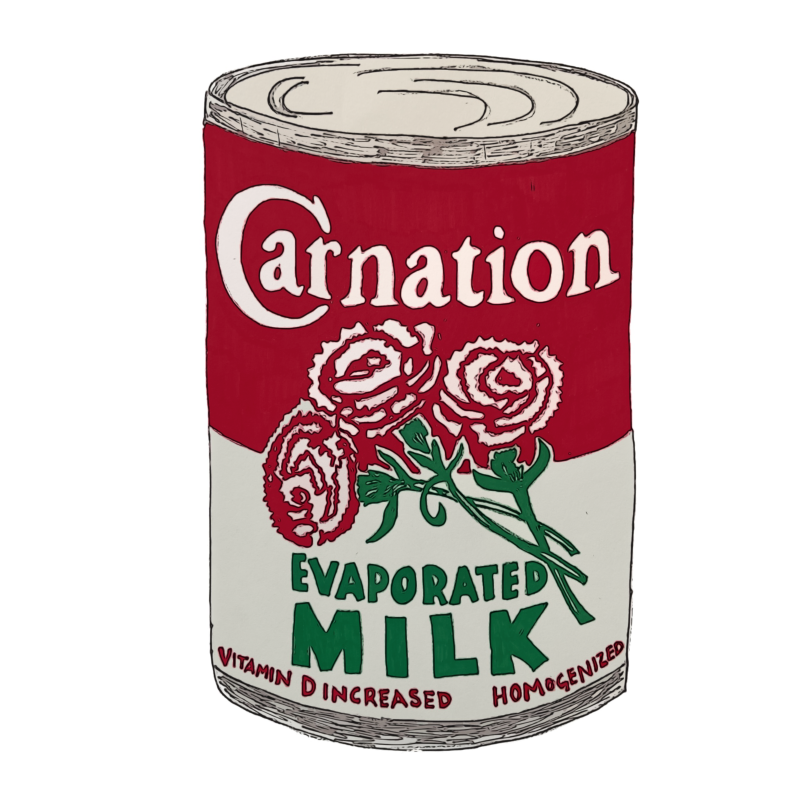
Writer, multidisciplinary artist and designer Tarralik Duffy’s work is a love letter to her hometown of Salliq, Nunavut. An intuitive connection to her Ancestors and a deep reverence for Inuit culture and tradition have informed her dynamic practice over the years – from jewellery making to large-scale soft sculpture. In her work, Duffy references objects from her own childhood that are iconic in Nunavut and embedded in Inuit contemporary culture.
Tarralik Duffy, Carnation (2021). Digitized pencil drawing. Courtesy of the artist.
On June 16, her most recent solo exhibition – Let’s Go Quickstop – opened at the AGO. The title references a northern Canada convenience store chain frequently visited by Inuit communities for groceries, takeout and hunting/camping supplies. The exhibition of drawings and sculptural works features striking depictions of products that were for sale during Duffy’s childhood: cigarettes, China Lily Soya Sauce, Crosby’s Molasses, Magic Baking Powder, Pepsi Cola, and Red Rose Tea.
In conversation with Foyer, Duffy offers insight into the inspiration behind Let’s Go Quickstop, the profound impact of her grandmother, and the importance of community-based Inuit artists.
A Q& A with Brian Porter, Principal, Two Row Architect, part of the team behind the Dani Reiss Modern & Contemporary Gallery expansion project. Read HERE
And, a closer look at McNicoll: an animation of McNicoll’s painting Interior highlights how small details mark the passage of time. Read HERE
I have not sent a message for the past couple of weeks as I have been travelling and meeting with members of the Bizot Group, which represents the directors of the top 40 or so global museums. The conference took place in three locations: Jakarta, Singapore and Sydney. Jakarta in particular is fascinating – it’s the largest city in Southeast Asia and the second largest urban area in the world. In Sydney, the Gallery of New South Wales just opened a spectacular new museum building for contemporary art. I was particularly interested in seeing how they installed the new spaces. The central new commission is by Lisa Rejana – the AGO co-purchased a major work by her a couple of years ago with the Israel Museum.
The focus of this year’s trip was “Sustainability Reimagined – How can museums combine their responsibility to the Past and to the Future?” We have been discussing a range of topics such as climate change and the new Bizot Green Protocols as well as global perspectives on decolonization. I co-led – with the directors of the National Gallery in Washington, the Tate and M+ in Hong Kong – the expansion of the Bizot Green Protocols, which aims to reduce the use of carbon to operate our buildings while creating a safe environment for the preservation of works of art. It was a very technical 6-month process and the AGO conservators and registrars were key in leading the development of what will become the new global standard this fall when it is adopted and implemented. Jessica Bright and Maria Sullivan were a big part of this. It is an example how the AGO team is helping lead and shape the museum field.
And now I am off again for two more weeks, taking a vacation with my family to the Shetland Islands. I think it will be more low key than Jakarta! It’s really important that everyone take vacations, not only mentally and physically but also restoratively. I look forward to seeing everyone in a couple of weeks, feeling much more refreshed and focused! (Yes, the jet lag has been bad this week…)
Click the links here to read this week’s Foyer stories:
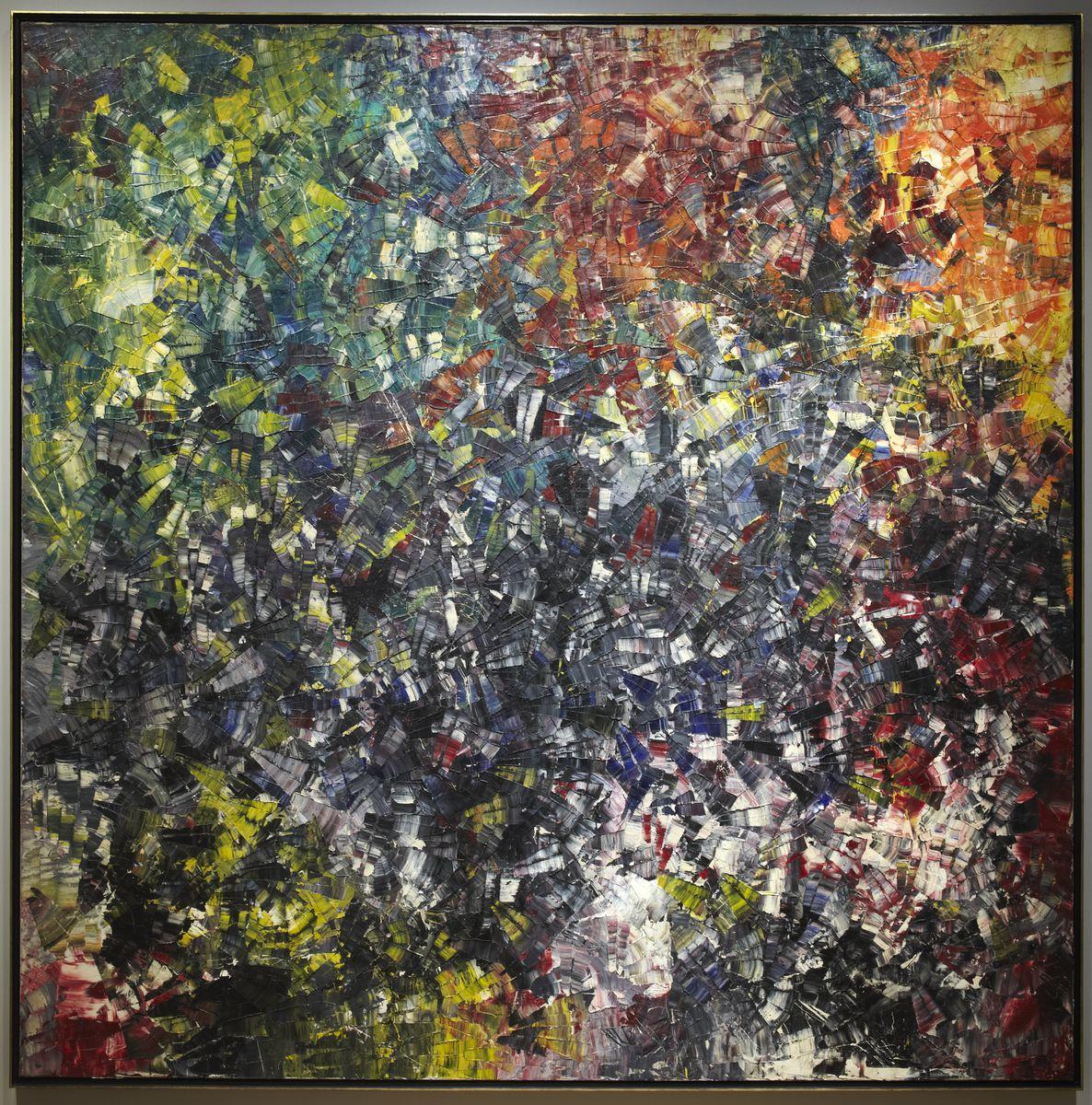
Chevreuse II— June’s RBC Art Pick is Chevreuse II (1953-54), a colour and texture-rich painting by Quebec-born painter Jean Paul Riopelle. Curently on view in the J.S. McLean Centre for Indigenous + Canadian Art, this Art Pick dives into Riopelle’s “mosaic” painting technique and a host of celebrations happening across the world to mark the centennial of Riopelle’s birth.
Sculpting whale bone with David Ruben Piqtoukun— With Radical Remembrance: The sculptures of David Rueben Piqtoukun closing on June 25, Foyer takes a closer look at two of Piqtoukun’s large-scale sculptures made from whale bone: Baby Brontosaurus (2022) and Thar She Blows! (2021).
Tracking the life narratives of Cassatt and McNicoll – two outstanding Impressionist painters
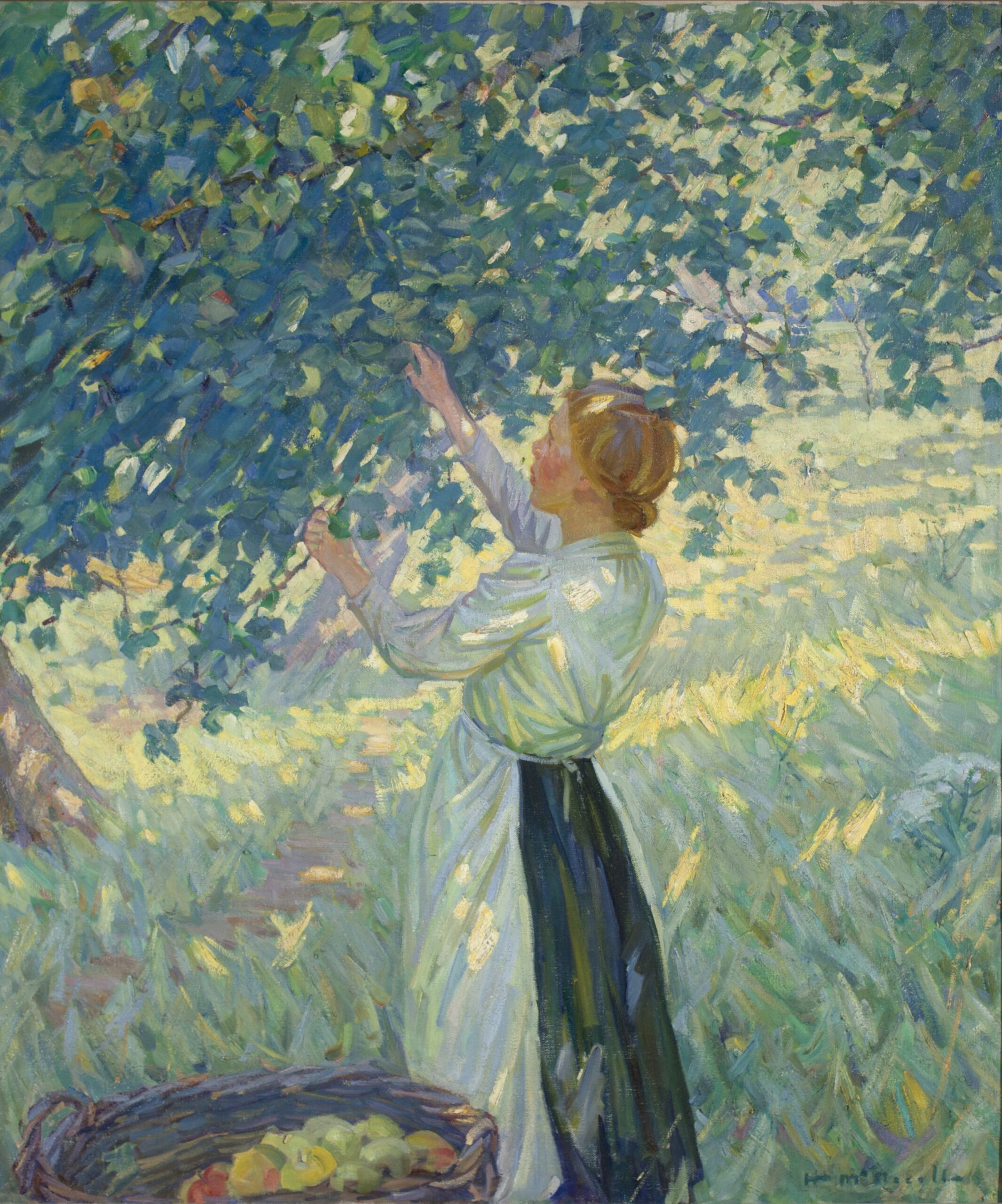
Helen Galloway McNicoll, The Apple Gatherer, c. 1911. Oil on canvas, 106.8 × 92.2 cm. Art Gallery of Hamilton. Gift of G.C.Mutch, Esq., in memory of his mother, Annie Elizabeth Mutch, 1957. 57.87.O.Photo: Bob McNair, 2014
For the first time ever, works of the two influential Impressionists, American Mary Cassatt (1844-1926) and Canadian Helen McNicoll (1879-1915), have been placed side by side in a major exhibition. Cassatt – McNicoll: Impressionists Between Worlds draws upon the AGO’s significant collection of McNicoll works while introducing audiences to Cassatt’s paintings – which have never before been seen on this scale in Canada.
Though separated by a generation, both Cassatt and McNicoll played a significant role in popularizing Impressionism among North American audiences, and expanding the scope of career possibility for women painters of their era. Motivated by ambitions to pursue art professionally, they both travelled across the Atlantic as young women, relocating in Europe where their respective careers blossomed. Below, take a closer look at each of their journeys.Mary Cassatt (1844-1926)
Born May 22, 1844 outside Pittsburgh, Pennsylvania, to a wealthy family, Mary Cassatt enjoyed the privilege of travelling to France and Germany as a young child. Just before her sixteenth birthday, she enrolled in the Pennsylvania Academy of the Fine Arts – a school that was progressive at the time for admitting many women. Five years later she bid farewell to the United States and embarked on a voyage to Paris, where she would eventually relocate. Cassatt spent time studying works at the Louvre and travelling and painting throughout rural France.
After returning home for a brief period in 1870 due to the Franco-Prussian War, Cassatt travelled back to Europe and eventually settled in Paris permanently in 1874. In 1879, she exhibited a selection of paintings and pastels at the fourth Impressionist show in Paris, alongside the likes of Edgar Degas, Claude Monet and Marie Bracquemond. She began carving out a name for herself as an integral part of the original impressionist movement. During this time, her family would frequently visit her, spending extended periods in Paris.
During the early 1880’s Cassatt worked with renowned Impressionists Edgar Degas and Camille Pissarro on a publication featuring black and white etchings, though this project was never realized. In 1890 and 1891, during a period of major innovation in printmaking, she created her celebrated “Set of Ten”colour prints. Three years later, Cassatt was commissioned to paint Modern Woman – a large mural located in the Woman’s Building at the World’s Columbian Exposition in Chicago. The piece symbolized the passage of knowledge among generations of women and celebrated women’s progress. This significant commission enabled her to purchase a large estate outside of Paris where she would live and work for the rest of her life. Around this time, her painting subjects shifted from family members to women and children hired from local villages.
In 1895, Cassatt’s work appeared in a Canadian exhibition for the first time, alongside four other Impressionist paintings that were the first to be exhibited in Canada. The work – Mother and Child – was lent to the exhibition by Sir William Van Horne, president of the Canadian Pacific Railway and close friend of the McNicoll family. Cassatt’s first solo exhibition in the United States was held the same year. Later, in 1906, the first major exhibition of French Impressionism was held in Canada at the Art Association of Montreal, featuring works by Cassatt, Renoir and Monet. This marked a major turning point in the acceptance of Impressionism by Canadian audiences.
In the latter years of her life, though cataracts impeded her ability to paint, Cassatt continued to work with dealers, collectors and museums to build collections of art featuring French impressionism. In 1915 she lent a number of her paintings to an exhibition in support of the American women’s suffrage movement. Cassatt passed away on June 14, 1926 at her chateau in Mesnil-Théribus, France.Helen McNicoll (1879-1915)
Born December 14, 1879 in Toronto, Ontario, Helen McNicoll became deaf at age two after contracting scarlet fever. While she was a young child, her family relocated to Montreal. Due to the privilege and mobility afforded by wealth, the McNicolls made several trips to visit relatives in England, familiarizing the young artist with transatlantic voyages and European art. In 1898 at age 18, McNicoll enrolled at the Art Association of Montreal (AAM). Among her surviving sketchbooks (all in the collection of the AGO) are drawings of plaster casts and live models that she created at this time.
In 1902, McNicoll left Canada to relocate to England. She settled in the Bloomsbury area of London to study at the Slade School of Art for the next two years. Her father was the vice-president of the Canadian Pacific Railway, which allowed her to travel on their steamships at little to no cost, as often as she liked.
At the same time that she shifted her studies to the Cornish School of Landscape, Figure and Sea Painting in 1906, her works were exhibited for the first time. She sent several landscapes and one portrait, The Brown Hat, home to be shown at the AAM and the Art Gallery of Toronto (now AGO). Two years later, McNicoll would win the first ever Jessie Dow Prize for her landscape paintings at the AAM’s annual spring exhibition – solidifying her position as a highly appreciated artist. By this time she was permanently established in England, and regularly travelled around Europe to paint, especially to France and Italy.
In 1913, the year of the Women’s Suffrage Procession in Washington D.C., McNicoll was elected as an associate member of the Royal Society of British Artists (RBA) as three of her canvases were exhibited in London. Then after exhibiting one of her most beloved paintings, Sunny September, at the RBA and later in Canada, she was elected as an Associate of the Royal Canadian Academy of Arts, the highest attainable level for a woman at that time. This accolade symbolized the widespread recognition McNicoll had gained domestically and abroad. She went on to win the Montreal Women’s Art Society annual prize that year as well.
Helen McNicoll died tragically in 1915 from complications due to diabetes at the young age of 35. The majority of her paintings were returned to her family in Montreal, and her oeuvre fell out of the public eye for a number of decades. The AGO is now home to the largest public collection of McNicoll’s paintings and drawings in the world. – Matthew Rolfe, AGO Communications team
The 2023-2024 Ontario Attractions Reciprocal Benefits have been released
This province-wide program offers AGO staff and volunteers admission to various attractions for free or at a discounted rate
Please read the conditions of each offer carefully before contacting an attraction – each participating attraction makes their own offer, and some apply to staff, volunteers or both
See the full list of attractions in the emailed PDF, or in the volunteer blog sidebar, under “Volunteer Benefits”
What are the details?
Staff and volunteers may be asked to provide proof of relationship to the AGO to receive the discount. This can include:
Valid ID card with or without a photo (you may be asked to show secondary ID such as a driver’s license)
For employees: proof of employment. Current 2023/2024 pay stub
Examples of included attractions
Ripley’s Aquarium of Canada: Have your Little Mermaid moment with 50% off admission for staff, volunteers, and up to four guests
Medieval Times Dinner and Tournament: Travel back in time with 25% off staff and volunteer admission and 20% off guest admission
Little Canada: Feel like a giant with free staff and volunteer admission
Aga Khan Museum: Take in rich exhibitions about Islamic arts with free admission for staff and volunteers
The program includes hotel rooms, indoor skydiving, waterparks, the Toronto Symphony and more!
Questions?
If you have any questions about the Ontario Attractions Reciprocal Benefits, reach out to Kate Bakos at [email protected]
I write with some news from the Director’s Office. After over 18 years of service, Sue Sen, executive assistant to the director, and CEO has decided to step away from the AGO. Such a role is critical, and Sue has fulfilled it with great skill and professionalism. Sue’s last day is June 14.
Given her utmost commitment to the AGO, this was a very difficult decision for Sue. She has served under two directors and has carried out her integral duties in the Director’s Office with quiet diplomacy and consummate ease, liaising with all departments of the AGO, trustees and donors, ministry stakeholders, embassies and consulates, and fellow museum institutions. She has been a part of remarkable change and growth at our museum, helping AGO leadership advance priorities forward.
Sue is without a doubt one of the most trustworthy people I have ever met, and I am truly grateful to her for her incredible contributions to the Director’s Office and the AGO as a whole. Stephan massively benefited from having such an accomplished EA upon his arrival at the AGO, and he and Sue developed a warm and wonderful relationship working together over the past several years.
We will miss Sue’s steadfastness and dedication, her loyalty, and her administration prowess. We wish her well in every respect. Thank you, Sue!
Sue has been on leave and will not be returning to the AGO but if you would like to sign a card for her, please pop by at your convenience to the Director’s Office. I would also like to thank Candace Ellison, Interim Executive Assistant to the Director, and CEO, who has jumped in to provide key support in Sue’s absence and has been doing an incredible job supporting Stephan and the team. Thank you, Candace.