Reimagining a Baroque artwork at the AGO
Fracture (2024) by Jesse Mockrin is a reimagination of Nicolas Tournier’s The Judgement of Solomon (c.1625), a Baroque painting also on view at the Gallery. Fracture marks the first work by Mockrin acquired by the AGO. Fracture is on view outside the main exhibition space in the E.R. Wood Gallery (121).
Mockrin re-envisions works by European Old Masters through a radical, contemporary feminist lens. Her approach often involves cropping, fragmenting, and recombining the portrayal of familiar historical figures and stories to reveal the unsettling and uncanny dramas buried in the art historical canon.
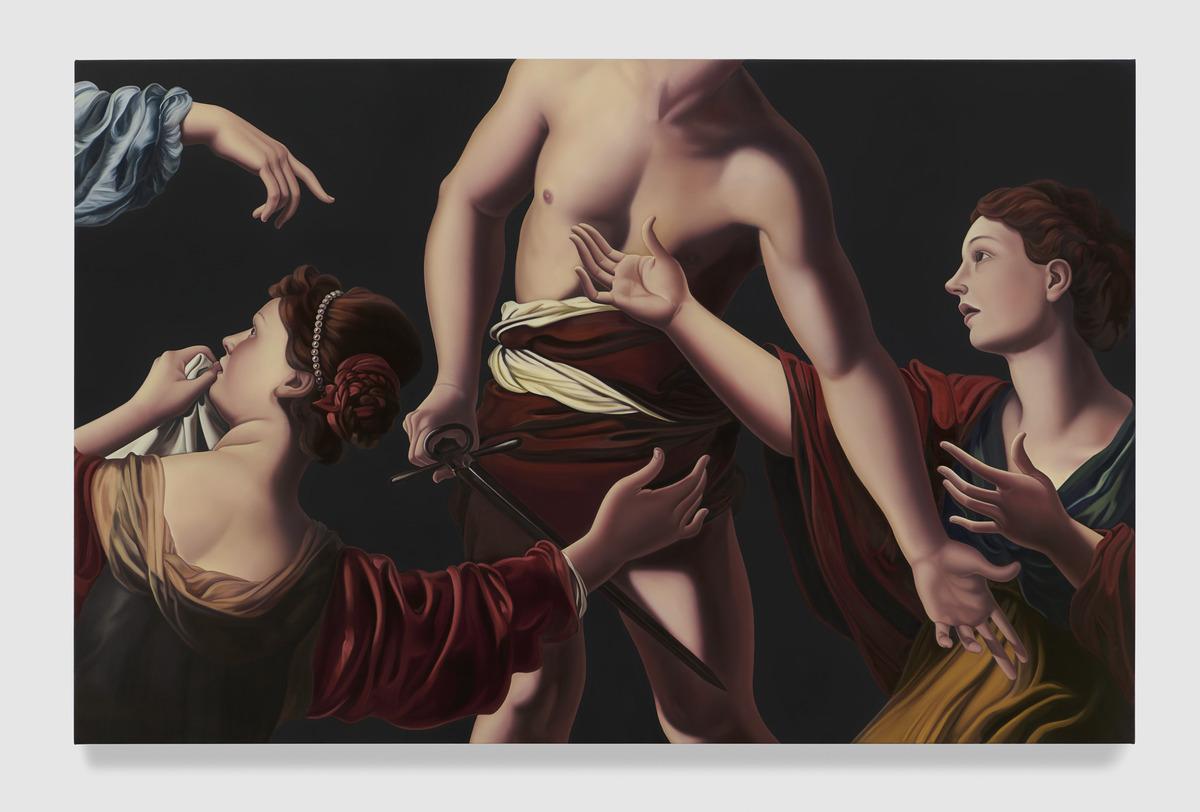
For this exhibition, Mockrin created 17 new large-scale paintings based on Baroque works at the AGO. To create Fracture (above), Mockrin spent two research visits to the AGO closely studying The Judgement of Solomon alongside other seventeenth-century paintings of the same subject. The biblical tale recounts the arrival of two mothers at the court of King Solomon, with a dead and living newborn between them. The women petition Solomon, both claiming the living newborn is theirs. Solomon suggests the newborn should be cut in half, and one of the women quickly withdraws her claim on the infant. Solomon rules that this woman, who puts the well-being of the baby before her happiness, must be the true mother.
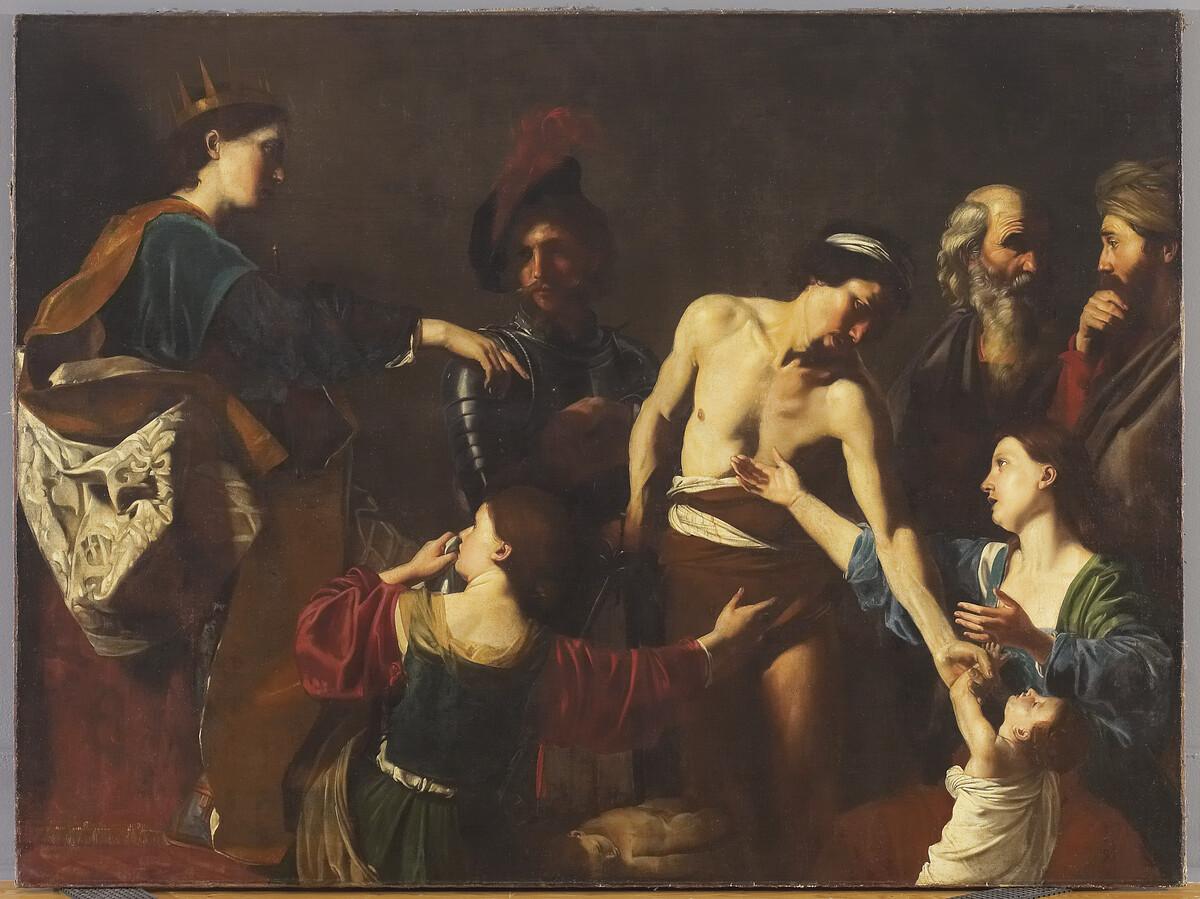
Nicolas Tournier. The Judgement of Solomon, c. 1625. Oil on canvas, Overall: 156 x 209 cm. On loan from a private collection. Photo © AGO.
Many of Mockrin’s works in Echo examine how gender-based violence is at the core of biblical and mythological stories and their depictions. This is exemplified in Fracture, where Mockrin frames her depiction of this tale to focus on the threat of violence towards the vulnerable mothers. Mockrin omits both the newborns and Solomon—the only suggestion of the king’s presence is an ominous hand floating in the top-right corner. While Fracture shifts focus to the two mothers, it maintains a dense web of gestures and gazes.
Mockrin shares in the exhibition catalogue: “I like revisiting these stories and the way they’ve been depicted because I think a lot of narrative details are lost on the general public today. And when I was making these paintings, I was really interested in the experience of the two women. So, I cropped parts of the composition and removed the men’s faces. The woman who lost her baby and is claiming another woman’s baby is suffering this horrific loss. Why doesn’t this story—that is about celebrating male wisdom—acknowledge that it’s at the expense of women’s suffering?”
Unlike the works of European Old Masters, Mockrin chooses to omit a background setting in Fracture. By rejecting background details, Mockrin draws the viewer’s attention solely towards what is occurring in the scene before them. These bare backgrounds, alongside Mockrin’s unique visual language of uncanny flatness, also place these historical stories within a contemporary setting, a reminder that these systems of violence persist into the present.
Echo is curated by Adam Harris Levine, the AGO’s Associate Curator of European Art. Learn more about Mockrin’s process this coming week in our Curator’s Talk organized exclusive for AGO volunteers. Join us on Wednesday October 29, at 6pm in-gallery. No need to register, just drop-in! We hope to see you there!