Curator and writer Ray Cronin on how Colville made the ordinary profound
Throughout the 1960s and 1970s, from Toronto to São Paulo, painters began rejecting figuration and perspective, embracing colour, scale and line, in pursuit of a more expressive and immediate experience. Exploring this impulse is the current exhibition Moments in Modernism, a unique conversation between artists of the era.
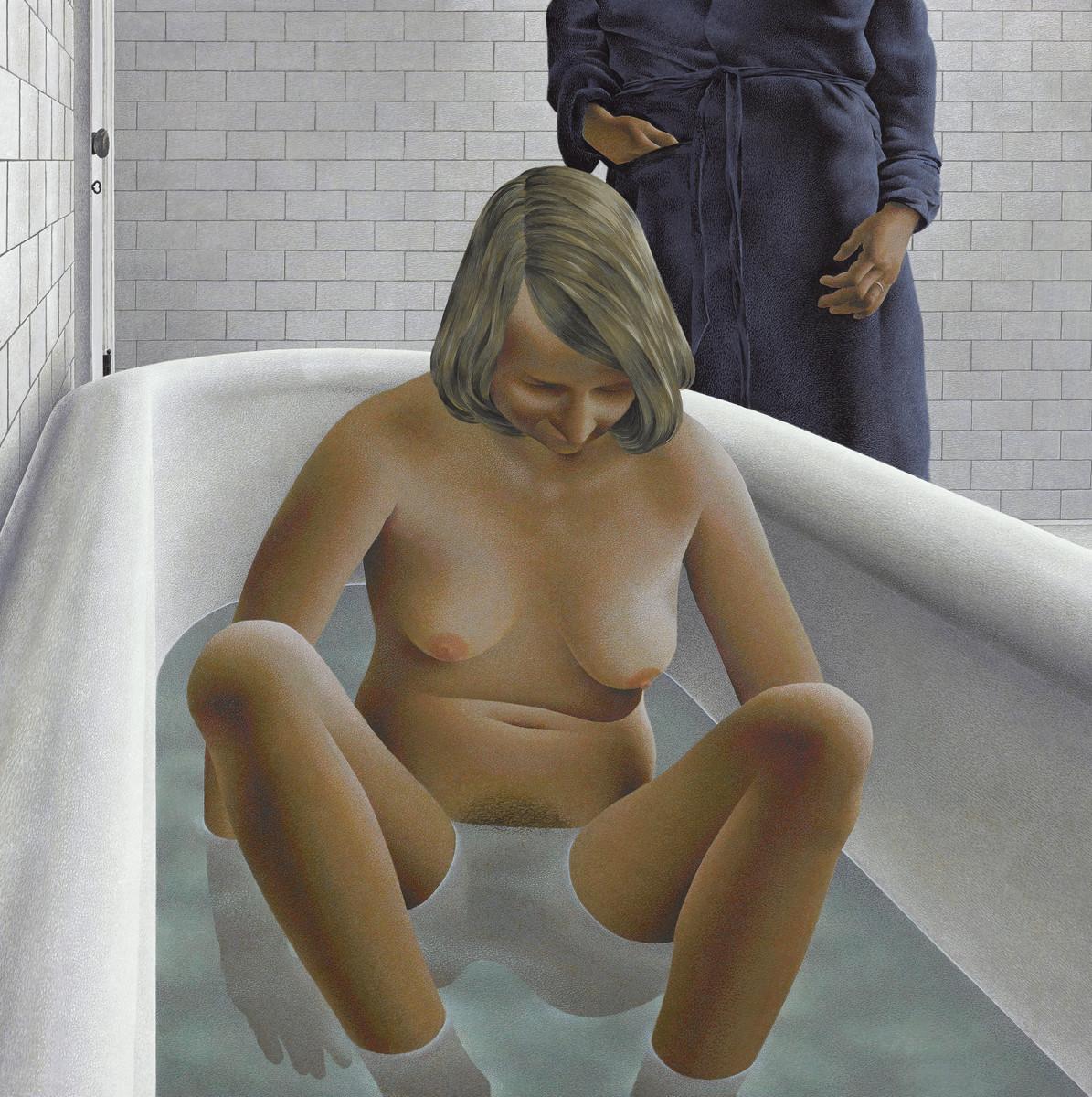
Nestled amongst the many large-scale abstract works on view, some of the most popular are those by Canadian painter Alex Colville (1920 – 2013), an artist whose highly controlled, but not quite real portraits of family and the Maritimes, have earned him fans around the world. Exploring Colville’s particular expression of place and his relationship to Modernism, the AGO welcomed Ray Cronin, Curator of Canadian Art at the Beaverbrook Art Gallery this past April, for a public talk.
Foyer reached out to Cronin to chat about why Colville continues to compel us and what makes him so modern:
Foyer: You’ve written a lot on Colville. What keeps you coming back to his work
Cronin: In part, it is because his work is so central to late modernity and is an existential response to World War II. He was someone who thought very long and hard about what it meant that the first half of the 20th century was chaos. His response to the bloodshed, the incredible tragedy of it all, was very thoughtful, very philosophical, and asked what it meant to be human in the world. It’s not unique – those questions permeated philosophy and art and culture in the 50s and 60s into the 70s. My father was a philosophy professor, and I always responded to Colville’s brand of thoughtfulness. Coming of age as a curator at a time when we struggled (and still do?) to understand what the post-modern is and worked against what came before, his works stuck out for me as something compelling, that can’t be dismissed.
Did you ever meet Colville?
I had the pleasure when I worked at the Art Gallery of Nova Scotia, to meet him several times. I got to visit him in his house, even had a couple conversations about philosophy. He loved that I had continued to read philosophy recreationally. A good friend of his, at Mount Allison, was a friend and colleague of my father’s. And he liked that connection.
There is an enduring perception of him as being a very isolated, withdrawn individual. Did he see himself that way?
He said himself that he went to Sackville to be isolated from the art world. But what he wanted was to avoid its influence. He wanted to be in a place where he could just concentrate on his own vision. That wasn’t very flattering to his colleagues at Mount Allison but was how he felt. After serving in the war, being a war artist, and having had an art studio in London, he consciously turns inward. Read more, in this week’s FOYER, linked HERE.